Archives
- 2026-10
- 2026-09
- 2026-08
- 2026-07
- 2026-06
- 2026-05
- 2026-04
- 2026-03
- 2026-02
- 2026-01
- 2025-12
- 2025-11
- 2025-10
- 2025-09
- 2025-03
- 2025-02
- 2025-01
- 2024-12
- 2024-11
- 2024-10
- 2024-09
- 2024-08
- 2024-07
- 2024-06
- 2024-05
- 2024-04
- 2024-03
- 2024-02
- 2024-01
- 2023-12
- 2023-11
- 2023-10
- 2023-09
- 2023-08
- 2023-07
- 2023-06
- 2023-05
- 2023-04
- 2023-03
- 2023-02
- 2023-01
- 2022-12
- 2022-11
- 2022-10
- 2022-09
- 2022-08
- 2022-07
- 2022-06
- 2022-05
- 2022-04
- 2022-03
- 2022-02
- 2022-01
br Methods br Results br Discussion
2024-03-22
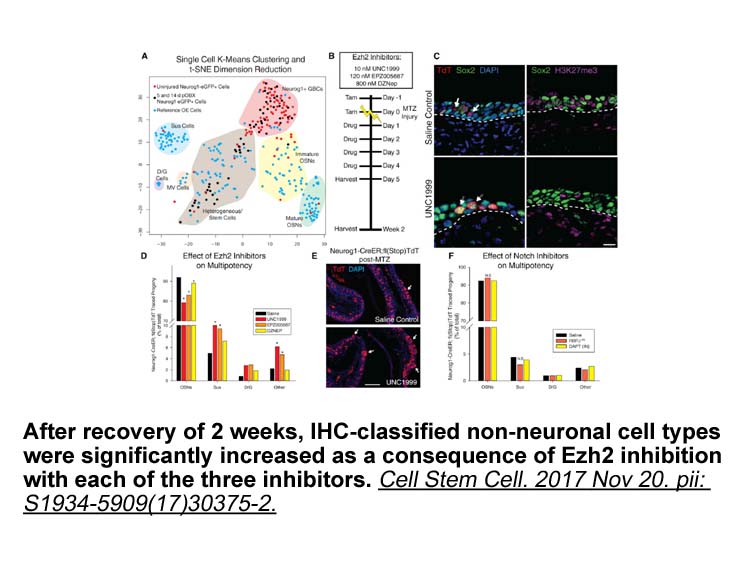
Methods Results Discussion Acknowledgements This work was supported by the National Institutes of Health [Grant R21 NS081429], a Pilot Grant from the Vanderbilt Conte Center supported by the National Institutes of Health [Grant P50 M096972], and by the Department of Anesthesiology at V
Chronic inflammation is associated with both initiation and
2024-03-22
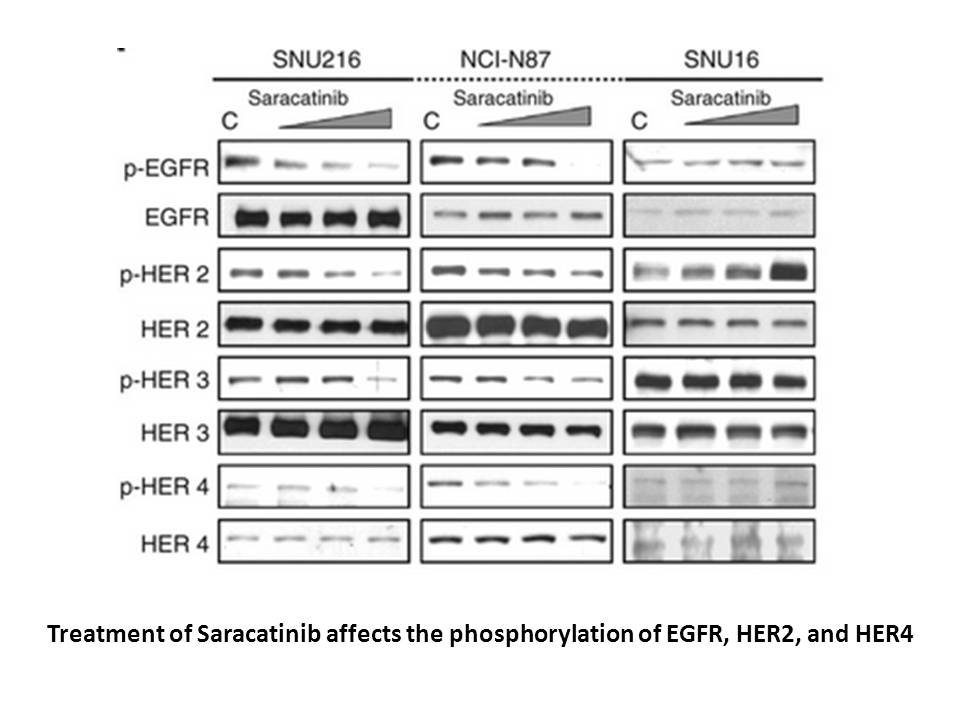
Chronic inflammation is associated with both initiation and progression of many neoplastic conditions [149], and ATX may be a player in the process. ATX/LPA signaling is positively correlated with the invasive and metastatic potential of several cancers including melanoma, breast cancer, ovarian can
br Autophagy in hemorrhagic stroke About of all strokes
2024-03-22

Autophagy in hemorrhagic stroke About 87% of all strokes cases are ischemic, the rest being hemorrhagic. ICH and SAH are the two major categories of hemorrhagic strokes (Bruder et al., 2014). Both types of stroke are associated with a high mortality and morbidity rate. The corresponding animal m
br Discussion In our current study we demonstrated
2024-03-22
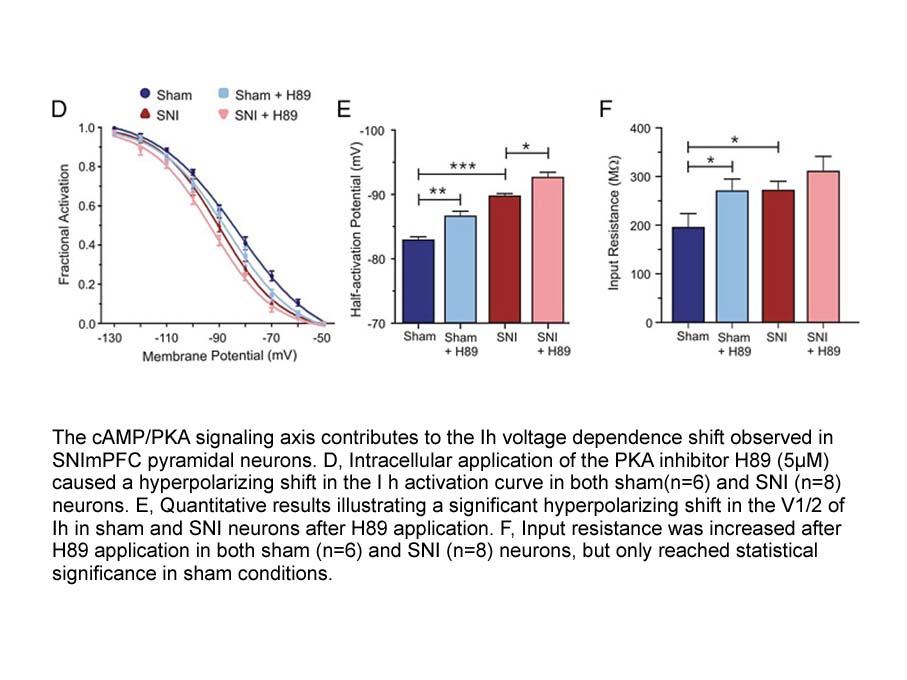
Discussion In our current study, we demonstrated that both the metastatic and recurrent ovarian cancer tissues expressed lower levels of p62 when compared with the patient-matched primary tumor samples. High myosin inhibitor levels of p62 were associated with long progression-free survival of pa
We next sought to determine the kinase
2024-03-22
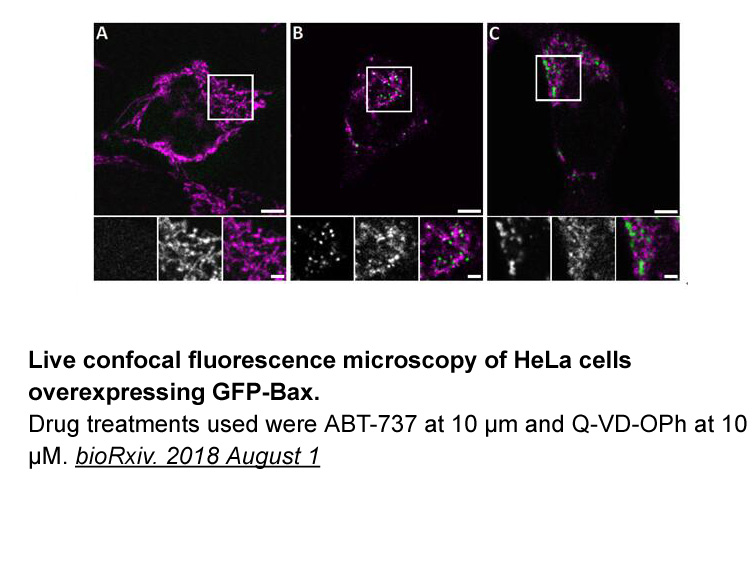
We next sought to determine the kinase responsible for IR-induced phosphorylation of 53BP1. Because the sites under investigation all lie in a consensus sequence for ATM, ATR and DNA-PK, that are all activated by IR, the involvement of each of these kinases was investigated. Preincubation of 1400W d
Among all the polysaccharide derivatives cationic carbohydra
2024-03-22
Among all the polysaccharide derivatives, cationic carbohydrate polymers such as quaternary ammonium salts and quaternary phosphonium salts have been the most popular and most efficient target Anti-cancer Compound Library in medical applications [24] and water treatment [25]. Recently, quaternary p
The fluorescence in a fluorescent antibiotic can
2024-03-22

The fluorescence in a fluorescent antibiotic can be derived either from functional groups with intrinsic fluorescence in an existing antibiotic, or via synthetic conjugation of a fluorophore to an antibiotic core to enable visualisation. Attachment of fluorophore to an antibiotic should ideally not
MD was the recipient of the Intergroupe Francophone de Canc
2024-03-22
MD was the recipient of the Intergroupe Francophone de Cancérologie Thoracique (IFCT) Alain Depierre Grant in 2014. JP was the recipient of the ARISTOT (Association de Recherche, d’Information Scientifique et Thérapeutique en Oncologie Thoracique) grant in 2016. Conflicts of interest statement
OCT also is known as POU
2024-03-21

OCT4 (also is known as POU5F1) plays an important role in embryonic stem cell self-renewal, development and reprogram somatic cell into pluripotent stem cell [[5], [6], [7]]. Recently, many studies also find OCT4 promotes the progression of many tumors. For example, Wnt/β-catenin promotes the expans
In terms of the full length proteins it was noted
2024-03-21
In terms of the full-length proteins, it was noted early on that ACs have two cellular localizations: as integral proteins of the plasma membrane and as soluble proteins in the cytosol. Based on the distribution in mammalian sequences, it was initially proposed that subclass IIIa contains only membr
To better understand the pathophysiology of
2024-03-21
To better understand the pathophysiology of ASDs, we would need comprehensive information on a) the functions of ASD-associated proteins in the brain, b) how mutations affect the expression level and function of these proteins, c) how mutations affect their function in neurons, and d) how changed ne
We have expressed the ECDs
2024-03-21
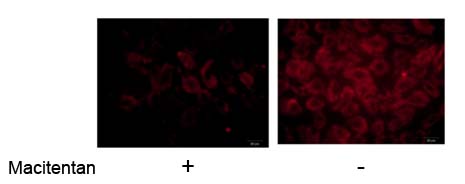
We have expressed the ECDs of the human α1, β1, γ and ɛ AChR subunits in the past using the methylotropic yeast Pichia pastoris as soluble glycosylated proteins [15], [16]. Further work with the γ subunit ECD revealed a marked improvement of the solubility and yield following the mutation of hydroph
Autotaxin has been linked to chemoresistance through its abi
2024-03-21
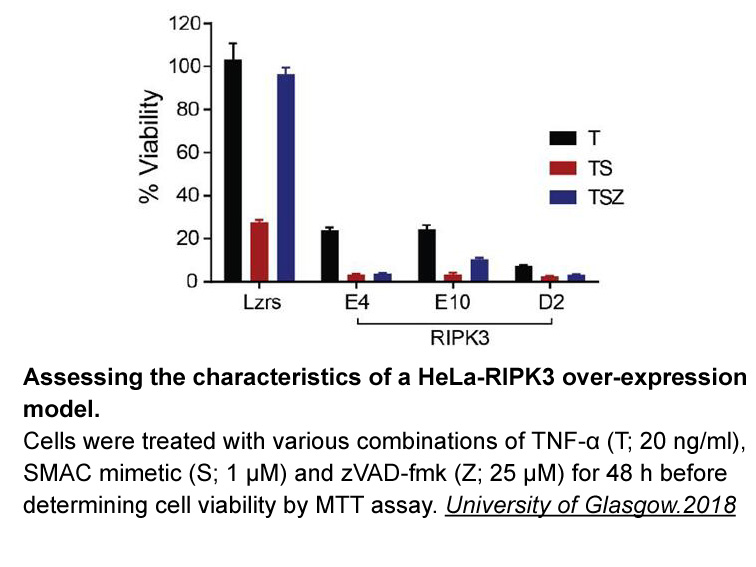
Autotaxin has been linked to chemoresistance through its ability to inhibit apoptosis induced by paclitaxel in breast cancer PR957 [15] and LPA can inhibit cell death induced by cisplatin [40]. Autotaxin was included in the present study because it was identified as being over-expressed in patients
br Materials and method br Results br Discussion Although
2024-03-21
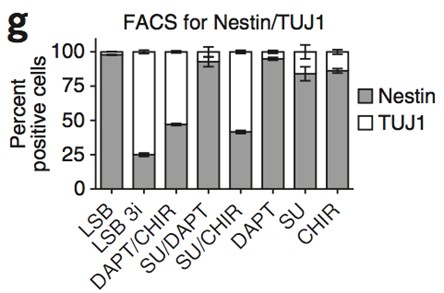
Materials and method Results Discussion Although several studies have showed the crude extracts of K. senegalensis possessed the anti-inflammatory and hypertensive activities (Olayinka et al., 1992). However, the anti-inflammatory effect and underlying molecular mechanisms of its bioactive
HMGA proteins have also been linked
2024-03-21
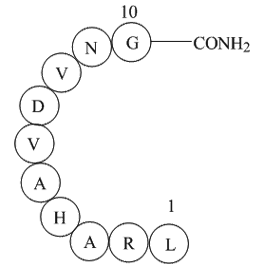
HMGA proteins have also been linked to localized changes in chromatin/nucleosome structure and alterations of cellular phenotype during induction of gene transcription in activated T lymphocytes. An adaptive immune response is initiated when naïve resting T lymphocytes encounter their corresponding
8723 records 218/582 page Previous Next First page 上5页 216217218219220 下5页 Last page